If your eyes are constantly dry, irritated, or just feel “off,” it’s time to dig deeper. At Big City Optical, we use advanced dry eye testing to figure out what kind of dry eye you have — and how to treat it.
Evaporative vs. Aqueous: What’s the Difference?
Dry eye isn’t just one thing. It’s actually a condition with two main types — and they each need a different treatment approach. Here’s how it breaks down:
- Evaporative Dry Eye:This is the most common type. It happens when your eyes don’t have enough oil in your tear film, so your tears evaporate too quickly. That missing oil usually comes from blocked or underperforming meibomian glands — tiny oil glands in your eyelids.
- Aqueous Tear Deficiency (Aqueous Dry Eye):This happens when your eyes don’t produce enough of the watery layer of your tears. The result is not having enough moisture to keep your eyes healthy and comfortable. It’s less common, but often linked to medical conditions like Sjögren’s syndrome or thyroid issues.
You can also have a combination of both, which is why accurate testing and booking a comprehensive exam matters. Treating the wrong type of dry eye with the wrong solution can lead to continued discomfort.
How We Diagnose Dry Eye
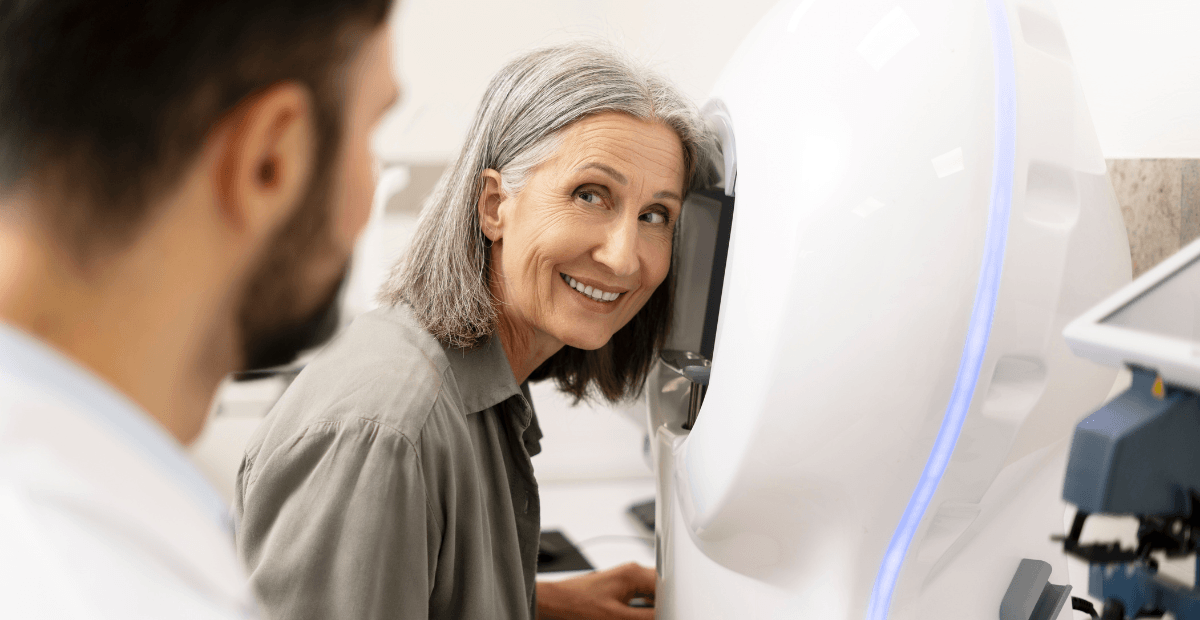
At Big City Optical, we don’t play the “try this drop and see what happens” game. Our dry eye testing tools help us pinpoint the problem fast.
Some of the dry eye diagnostic tests we may use include:
- Tear Breakup Time (TBUT): Measures how long your tears stay on your eye before evaporating.
- Meibography: Shows us the health of your meibomian glands with high-res imaging.
- Schirmer’s Test: Checks how much tear fluid your eyes are producing.
- Osmolarity Testing: Looks at the saltiness of your tears, which can reveal imbalances.
These tools help us go beyond symptoms and see what’s happening at the surface level and deeper.
Why Accurate Dry Eye Testing Leads to Better Relief
Dry eye isn’t something you just “live with.” But tossing eye drops at the problem without knowing what kind of dry eye you have will delay your relief. It might help temporarily, but the problem is still there.
When we know what’s going on, evaporative, aqueous, or a combo, we can build a treatment plan that works for your eyes.
Dry eye care is highly individualized and often involves a combination of therapies designed to improve tear quality, support natural tear production, and reduce inflammation. Depending on exam findings and symptoms, treatment recommendations may include:
- Warm compresses or therapeutic heat masks to support healthy oil gland function
- In-office gland expression or biofilm removal procedures to improve tear film stability
- Prescription eye drops that reduce inflammation and help stabilize the tear film
- Omega-3 supplements to support the quality of tear oils
- Punctal plugs to help retain natural tears on the eye surface longer
- Lubricating eye drops or gels formulated for added moisture and comfort
- Evaluation and management of underlying systemic or inflammatory conditions when relevant
- A customized care plan that may combine multiple therapies and evolve over time based on response and follow-up findings
Every eye is different, and we’ll work with you to find a treatment plan that brings you maximum relief.
Dry Eye Testing and Care in Chicago
You shouldn’t have to guess what’s wrong with your eyes — and at Big City Optical, you won’t have to.
We offer cutting-edge dry eye testing at all Chicago locations, so we can diagnose what’s actually happening and treat it right the first time. Whether your dry eye is new, chronic, or just getting worse with time, our team’s got your back.
Book online to schedule your dry eye evaluation at Big City Optical today.